


















NASA announces discovery of new astronomical object in space confirmed by Hubble Telescope

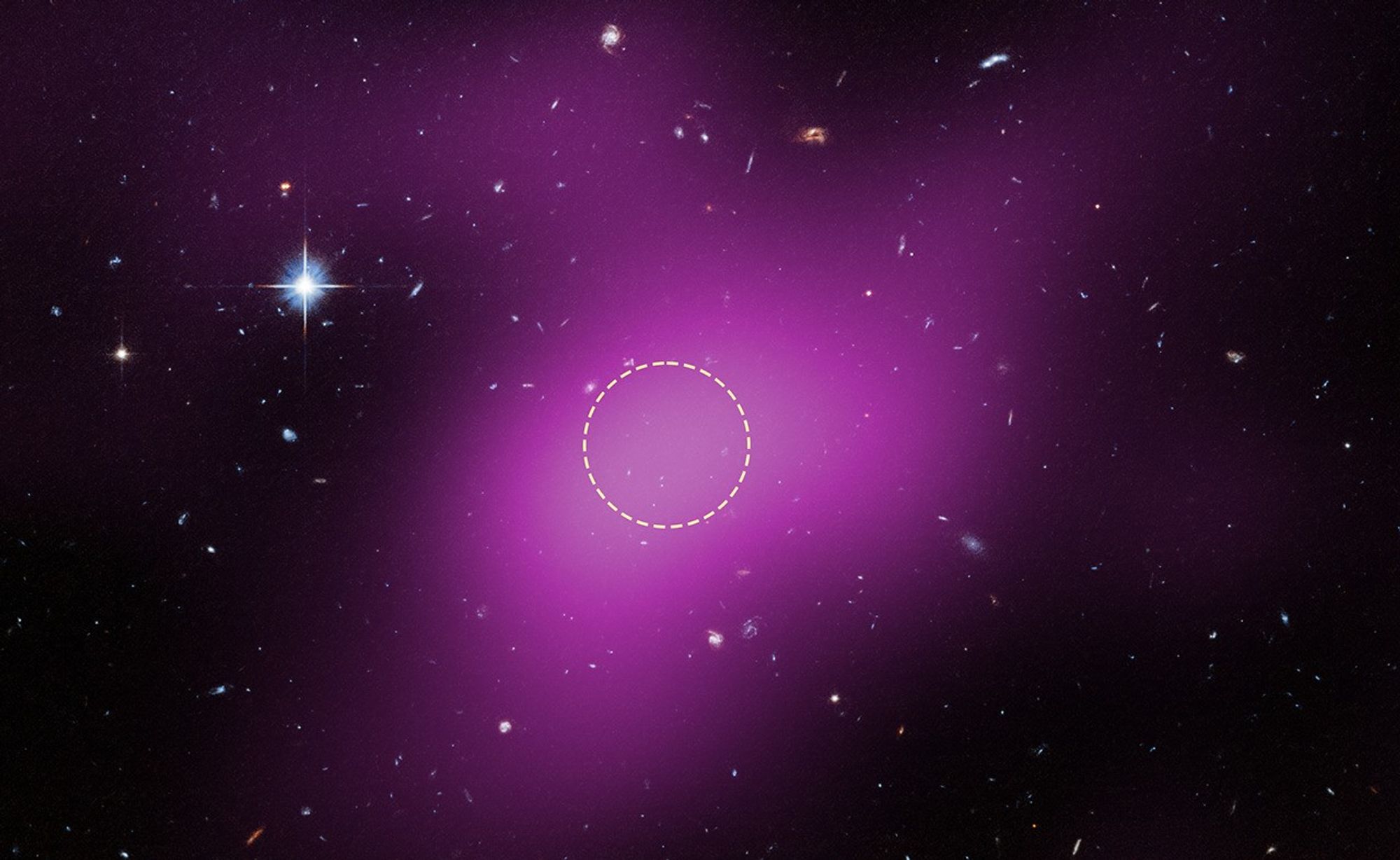
A NASA team using the Hubble Space Telescope found an object in space never recorded before, nicknamed "Cloud-9."
Cloud-9 is a starless, gas-rich, dark-matter cloud considered a "relic" or remnant of early galaxy formation, NASA said.
This discovery marks the first confirmed detection of such an object in the universe.
10 RARE DISCOVERIES AND MEMORABLE MOMENTS FROM SPACE IN 2025
NASA said the finding of Cloud-9 will help further the understanding of galaxy formation, the early universe and the nature of dark matter.
Cloud-9 is a Reionization-Limited H I Cloud, or "RELHIC." NASA said the H I refers to neutral hydrogen and RELHIC describes a natal hydrogen cloud from the universe’s early days, a fossil leftover that has not formed stars.
NASA said scientists have looked for evidence of an object like Cloud-9 for years.
It wasn't until the team used the Hubble Space Telescope that they confirmed Cloud-9 was indeed starless.
"Before we used Hubble, you could argue that this is a faint dwarf galaxy that we could not see with ground-based telescopes. They just didn't go deep enough in sensitivity to uncover stars," said lead author Gagandeep Anand of STScI. "But with Hubble’s Advanced Camera for Surveys, we're able to nail down that there's nothing there."
NASA said Cloud-9 suggests the existence of many other small, failed galaxies in the Universe.
The starless relic was discovered three years ago as part of a radio survey by the Five-hundred-meter Aperture Spherical Telescope (FAST) in Guizhou, China, NASA said. This finding was later confirmed by the Green Bank Telescope and the Very Large Array facilities in the United States. But only with the Hubble Telescope could researchers definitively determine that the failed galaxy contains no stars.
SEE IT: RARE SIGHT CAPTURED DURING PEAK OF QUADRANTID METEOR SHOWER
"This cloud is a window into the dark universe," said team member Andrew Fox of the Association of Universities for Research in Astronomy/Space Telescope Science Institute (AURA/STScI) for the European Space Agency. "We know from theory that most of the mass in the universe is expected to be dark matter, but it’s difficult to detect this dark material because it doesn’t emit light. Cloud-9 gives us a rare look at a dark-matter-dominated cloud."
Cloud-9 is located 14 million light-years from Earth.
What's Your Reaction?
 Like
0
Like
0
 Dislike
0
Dislike
0
 Love
0
Love
0
 Funny
0
Funny
0
 Angry
0
Angry
0
 Sad
0
Sad
0
 Wow
0
Wow
0