
















Have you seen these strange lights in the sky? NASA wants your photos to help scientists

THE TAKEAWAY
NASA is asking the public to help researchers study Transient Luminous Events (TLEs), spectacular flashes of light that occur high above thunderstorms.
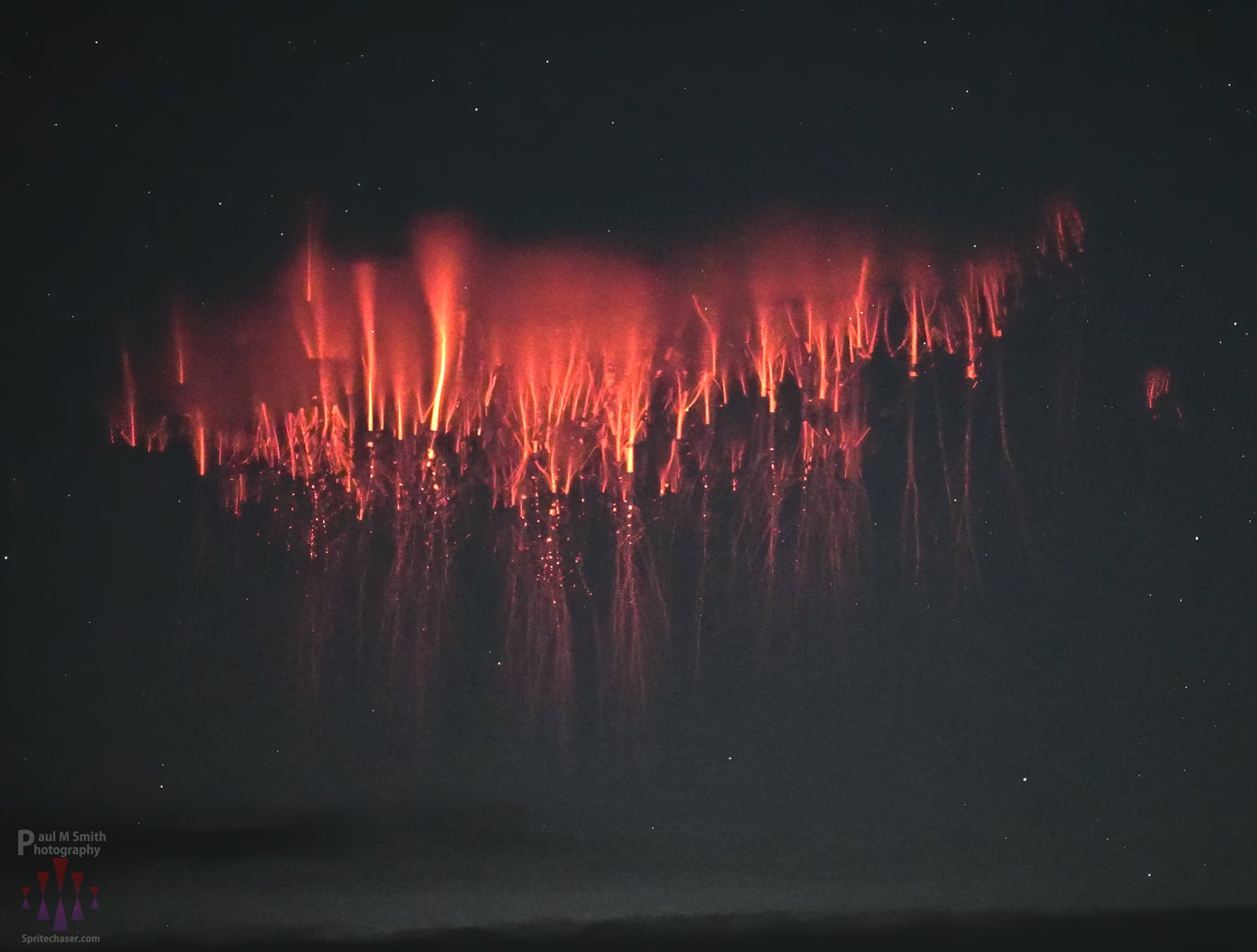
TLEs are colorful, bright, faster-than-lightning flashes that thunderstorms generate above the clouds, according to NASA.
The most frequently observed TLEs are called sprites, large reddish-orange flashes high in Earth's upper atmosphere, typically 50 miles above thunderstorms.
END OF AN ERA AS NASA TELESCOPE THAT DETECTED THOUSANDS OF GAMMA-RAY BURSTS NEARS ITS FINAL DAYS
TLEs have mythological names like sprites, TROLLS (Transient Red Optical Luminous Lineaments) and green ghosts.
Starting in 2022, NASA began the Spritacular citizen science project to advance the study of sprites and other TLE events by crowdsourcing observations of the colorful phenomenon.
The citizen project aims to connect professional scientists with members of the public who would like to contribute to these scientific studies.
"Spritacular will bridge this gap by creating the first crowdsourced database of sprites and other TLEs that is accessible and readily available for scientific research," said Dr. Burcu Kosar, a space physicist at NASA’s Goddard Space Flight Center in Greenbelt, Maryland.
SOMETHING SPOOKY IS BREWING IN THIS EERIE CORNER OF THE UNIVERSE
Sprites occur moments after a lightning strike, when a sudden reddish flash creates a range of artistic and sporadic shapes.
It remains unclear how and why these spectacular shapes form.
The first time this sort of atmospheric event occurred was in 1989, when researchers at the University of Minnesota accidentally caught it on camera.
If you’d like to participate in the citizen project, NASA has a few tips to help get the best results.
If you’re lucky enough to photograph the event, visit the project website, click the Get Started tab, and follow the four-step directions.
WATCH: RARE 'SPACE LIGHTNING' PHENOMENON ISN'T AN ALIEN INVASION, BUT IT SURE LOOKS LIKE ONE
The research will help scientists better understand Earth's upper atmosphere as space exploration continues to expand.
What's Your Reaction?
 Like
0
 Dislike
0
 Love
0
 Funny
0
 Angry
0
 Sad
0
 Wow
0