















Rare severe storm threat targets Southern California while Arizona faces potential egg-sized hail, tornadoes

THE TAKEAWAY
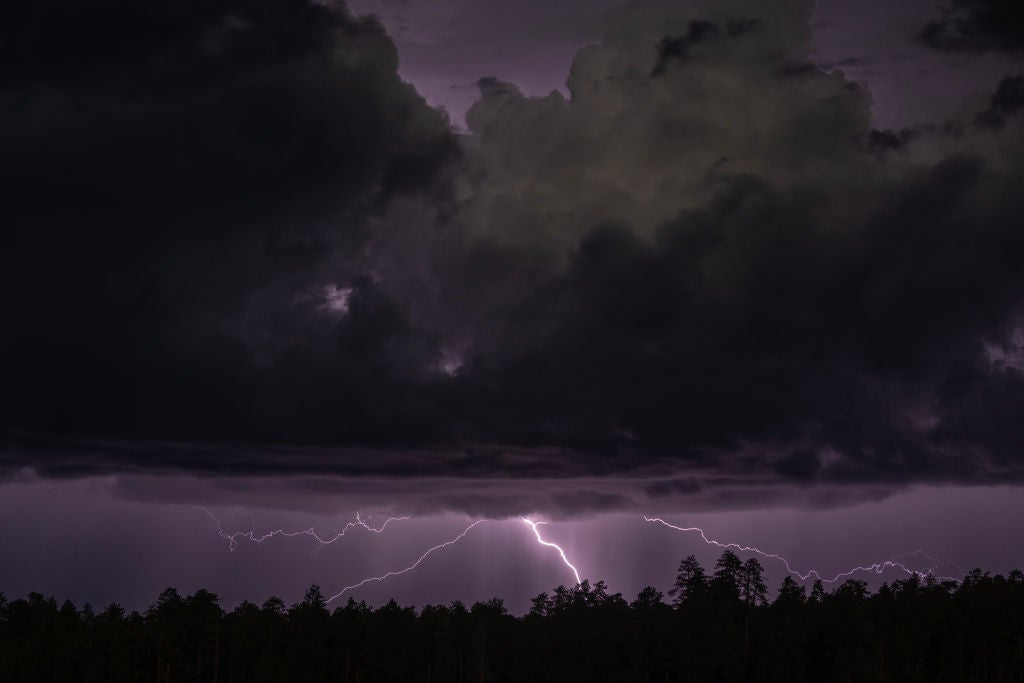
FLAGSTAFF, Ariz. — Severe thunderstorms blasted parts of Arizona early Wednesday ahead of a rare severe weather threat that will intensify through the day and into the evening. Parts of the state, including Flagstaff and Prescott, are under a Level 3 out of 5 risk of severe thunderstorms capable of producing damaging egg-sized hail and tornadoes.
A strong storm system moving across the West Coast will tap into a plume of humid air over Arizona Wednesday afternoon. The same system will also soak parts of Southern California and create a low-end tornado risk across a corridor from Carmel southward to Los Angeles.
Rain will begin to arrive on Wednesday afternoon across Southern California, potentially causing flash flooding, particularly over wildfire burn scars.
Meanwhile, parts of Central Arizona are under Level 3 severe weather threat, which hasn't happened in October since NOAA moved to a five-tiered risk scale in 2015.
A Tornado Warning was issued for part of Yavapai County on Wednesday morning.
Arizona could see a stronger round of severe storms Wednesday evening. A Level 2 severe storm threat covers Phoenix, Glendale, Chandler and Scottsdale.
Intense thunderstorms could also produce flash flooding.
A Flood Watch is in effect across much of the state, as well as parts of southern Utah, southwestern Colorado and western New Mexico through Thursday.
More thunderstorms could develop Thursday as the system shifts east toward the Rockies.
Arizona and other parts of the Southwest generally see most of their severe weather during monsoon season, which typically runs from mid-June to the end of September.
These storms could signal a larger pattern of increased storminess and severe weather across the Southern Tier of the country that could unfold this winter due to an impending Super El Niño. During Super El Niño years, the jet stream usually shifts directly over the southern U.S., acting as an atmospheric conveyor belt for storms and leading to flooding and severe weather outbreaks.
According to the FOX Forecast Center, two of the past three super El Niño winters, 1997-1998 and 2015–2016, have brought significant severe storm outbreaks mainly across the Gulf Coast, Southeast, and Southern Plains.
What's Your Reaction?
 Like
0
 Dislike
0
 Love
0
 Funny
0
 Angry
0
 Sad
0
 Wow
0