















Glacier National Park reports first case ever of deadly bat fungal disease

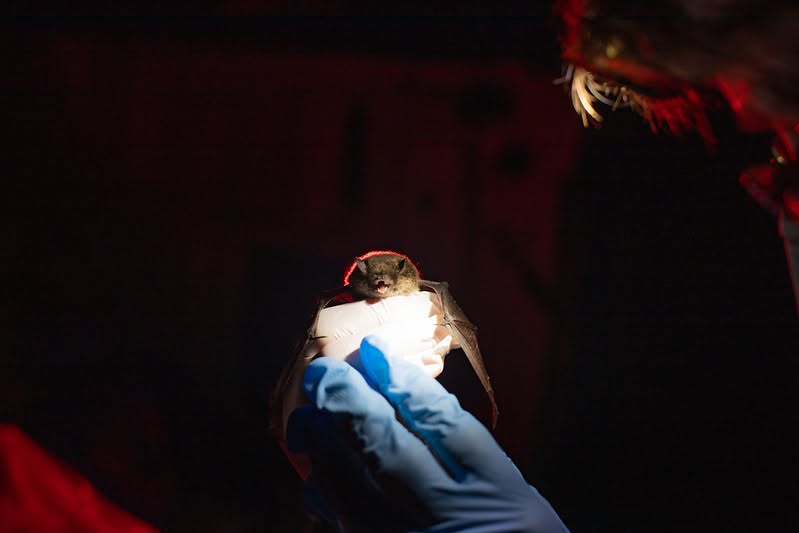
WEST GLACIER, Mont.– A little brown bat was discovered dead in Glacier National Park with an often-fatal disease called white-nose syndrome (WNS).
The bat was found earlier this year in May, in the Saint Mary area of the park, Glacier National Park said.
RABIES CONCERNS GROW AFTER RECORD NUMBER OF INFECTED BATS FOUND IN LOS ANGELES
In addition to finding the deceased bat, samples collected from live bats in June showed the fungus that leads to white-nose syndrome, called Pseudogymnoascus destructans (Pd).
It's the first time the fungus and WNS have been detected among the 10 documented bat species in Glacier National Park.
Pd often appears as a fuzzy white substance on bats' faces, which is how the disease got its name.
White-nose syndrome affects hibernating bats, causing them to wake during hibernation and depleting critical fat reserves, often leading to dehydration, starvation and death.
MONARCH BUTTERFLIES HEAD TO MEXICO AS SCIENTISTS UNLOCK NEW WAY TO TRACK THEIR JOURNEY
Pd lives in damp, dark places, like caves, according to whitenosesyndrome.org. Beyond the external signs of white-nose syndrome, the disease might cause bats to start exhibiting odd behaviors like flying outside in the daylight.
Glacier National Park has monitored bat diversity, occupancy and health since 2011 with help from the Glacier National Park Conservancy, Natural Resource Fund Source and National Fish and Wildlife Foundation.
The national park said all bats in Glacier feed on insects and serve as prey for other wildlife, including raptors and weasels. Significant declines in bat populations could have far-reaching effects on the park’s ecosystems and neighboring landscapes.
VENOMOUS SPIDERS LURKING INSIDE DC GOVERNMENT BUILDINGS HAVE SURPRISING BENEFITS, EXPERT SAYS
In addition to the monitoring within Glacier National Park, the park is also participating in research to help design a vaccine to protect bats from WNS.
Since its discovery in 2006 in New York state, WNS has spread across North America, killing millions of bats.
The disease is spread primarily through bat-to-bat contact, and the fungus can persist in underground environments for many years, continuing to infect new bats.
HALLOWEEN HAZARD: WILDLIFE OFFICIALS WARN SPOOKY SEASON DECORATIONS POSE A HIDDEN DANGER
WNS has been confirmed in 42 states and 9 Canadian provinces, Glacier National Park said.
The disease can't be spread to humans or pets, but people can unintentionally spread the fungus to new areas on clothing, shoes and caving equipment.
To help protect them, never pick up or handle bats.
After visiting a cave, decontaminate clothing, footwear and gear by following U.S. Fish and Wildlife Service decontamination guidance.
What's Your Reaction?
 Like
0
 Dislike
0
 Love
0
 Funny
0
 Angry
0
 Sad
0
 Wow
0