














What do Fire Weather Watches and Warnings mean?


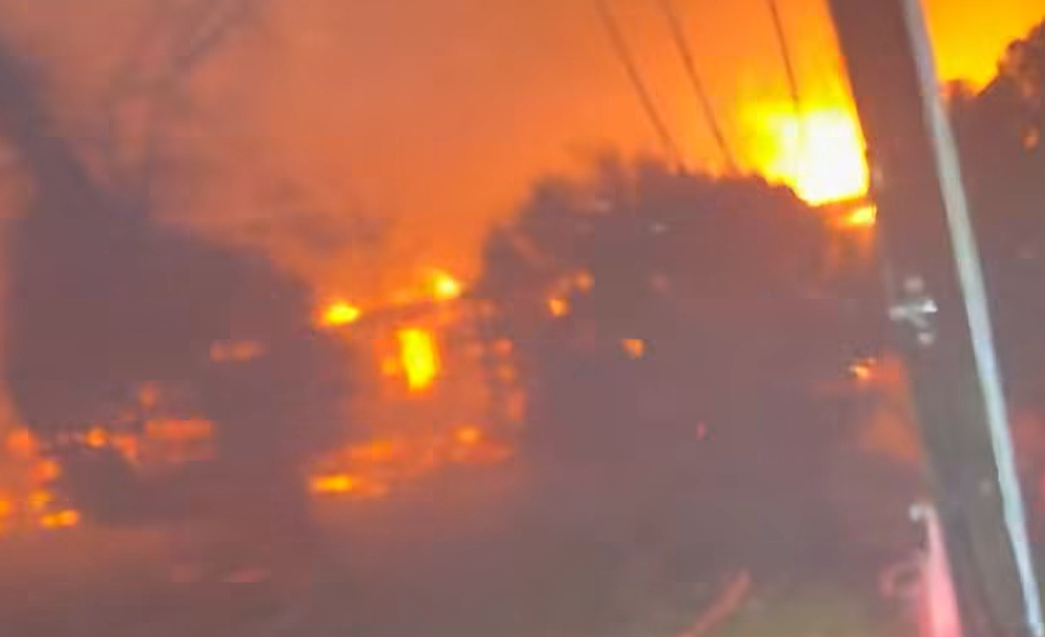
Just as the term suggests, fire weather, refers to conditions that allow fire, typically wildfires, to spread rapidly. Generally, fire weather consists of some combination of low humidity, dry fuel, gusty winds, and warm temperatures.
Drought also creates prime conditions for wildfires.
UNDERSTANDING WILDFIRE RISK AND DANGER
The National Weather Service (NWS) uses a two-tiered alert system: A Fire Weather Watch indicates that fire weather conditions are possible, while a Red Flag Warning means that dangerous fire weather is already in place.
FOX Weather refers to Red Flag Warnings as "Fire Weather Warnings" for greater clarity.
Each NWS office has local criteria which are used to determine what warrants a Watch or Warning. For example, the criteria used by an office serving the Plains may differ from those used by an office serving the forests of the Southeast, where fuel types and moisture levels are different.
FOX Weather uses three tiers of severity in fire weather forecasts.
Elevated Fire Weather indicates the increased presence of dry fuel, gusty winds and low relative humidity for at least three hours.
Critical Fire Weather means sustained winds of at least 20 mph, low humidity and temperatures above 50 degrees for at least three hours.
Extreme Fire Weather is used for sustained winds of at least 30 mph, low humidity and temperatures above 60 degrees for at least three hours.
HOW TO PREPARE YOUR HOME FOR WILDFIRES
The three-hour duration serves as a baseline duration that would allow for rapid fire growth during fire weather conditions.
Wildfires are typically caused by people or lightning. Wildfires can spark during severe thunderstorms, even if it's raining at the time.
However, dry lightning is also a common wildfire source that occurs during thunderstorms that have little or no precipitation.
PREPARATION TACTICS FOR WILDFIRE SITUATIONS
Meanwhile, 85% of wildfires in the U.S. are caused by human activity, according to the National Interagency Fire Center.
Common causes include: open burning, hot vehicle exhaust and dragging chains, improperly extinguished campfires, downed power lines, fireworks and arson.
What's Your Reaction?
 Like
0
 Dislike
0
 Love
0
 Funny
0
 Angry
0
 Sad
0
 Wow
0