















From space to sea: How satellite data is shaping Maine's oyster industry

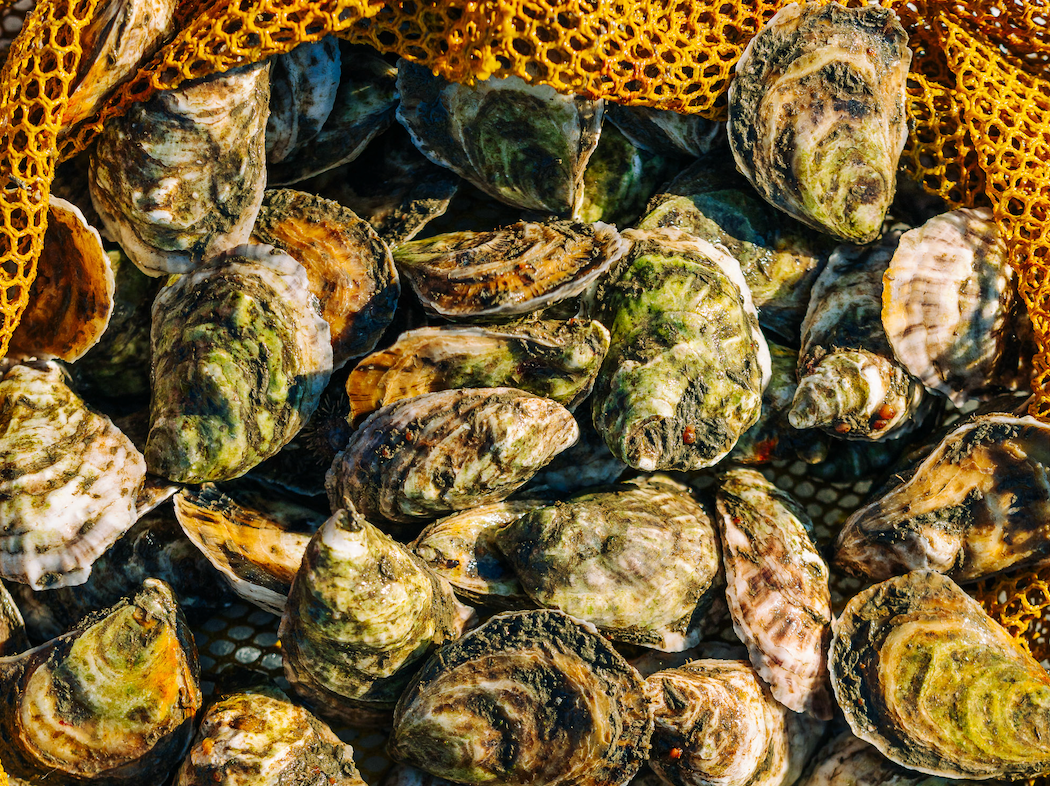
When Abby Barrows began noticing changes in the Gulf of Maine, she grew concerned about the future of her coastal community. She decided to try to help and purchase an oyster farm as a way to support water quality, strengthen the local ecosystem, and help sustain Maine’s marine life.
FREEZING TEMPS PUTS MARYLAND OYSTER HARVEST ON HOLD
"I realized that the way of life that really shapes our community might be changing and going away," Barrows told FOX Weather. "I started to hear more about oysters and just their ecosystem services that they provide and how they are beneficial for the waters."
With no prior experience in business or aquaculture, Barrows started small, gradually build upon the Dear Isle Oyster Company.
"I just loved the work, being out in the water, growing food, interacting with the animals, and it just dovetailed nicely in with thinking about water quality and the future of Maine coastal communities," Barrows said.
More than a decade later, her farm is not only focused on becoming a plastic-free oyster farm but also contributes data to researchers at the University of Maine.
That data is now a foundation for a study and is helping create a satellite-based tool/app, which is still a proof of concept, to guide oyster farmers across Maine in choosing optimal growing locations.
"It’s great to have….. given people more knowledge to make educated decisions, especially when it comes to something that takes many years and takes a lot of money," Barrows said.
The tool developed by Emmanuel Boss, Jordan Synder, Damian Brady, Thomas Kiffney and others, shows how temperature data from Landsat, a joint NASA and U.S. Geological Survey satellite imagery program, and the European Sentinel-2 satellite, to estimate oyster food availability.
These factors, combined, can predict how quickly Maine oysters can grow. Small differences in temperature and food availability can play a significant role in how quickly oysters grow, making location-specific data critical for farmers.
"These satellites are passing over the Earth constantly, and they're taking a ton of great data," University of Maine scientist, Thomas Kiffney said. "They're already out there in space taking these images and finding ways to provide that data to build helpful tools on top of it."
LOCAL STATE OF EMERGENCY DECLARED IN CALIFORNIA OVER INVASIVE SPECIES THREAT
Maine has more than 3,400 miles of coastline, much of it is jagged and shaped by glaciers. In this environment, water depth, temperature, and circulation can shift dramatically within a few miles. That complexity can make it difficult for farmers to identify the best locations to grow oysters.
"Oyster aquaculture and growing all shellfish really is a very site-specific business," Kiffney said. "Their growth and survival are all really based on the environment. And so, the site that you choose to farm can have big consequences for your business around time to market."
When they started, the researchers knew that they needed a satellite that could capture detailed images. By utilizing the Landsat satellite, it was able to provide high-resolution data even by showing small temperature differences in the water.
HOW ONE NEW YORK BREWERY IS USING OYSTERS TO SAVE LONG ISLAND REEFS
However, Landsat passes over the same area only every eight days, and frequent cloud cover can block observations. To address this, researchers analyzed 10 years of data along with data from oyster farmers in the area, to fill in those gaps.
They then used Sentinel-2 imagery to measure ocean color, which helps estimate how much microscopic food, such as plankton, is available in the water.
Combined, the data allows scientists to develop a tool that shows farmers where oysters are most likely to thrive, including areas that may have been overlooked.
"Some of the areas that are current hotbeds for oyster farming popped up," Kiffney said.
Farmers across the community say the University of Maine research is important since it can help those just starting out by giving them a better understanding of how environmental factors can affect growth rates.
But some farmers point out that the study does not account for social and logistical factors involved in oyster farming, such as access to waterfront property, navigation channels, intertidal areas and eelgrass.
MARYLAND OYSTERS THRIVE AS POPULATION REACHES SECOND-HIGHEST IN 41-YEAR MODERN HISTORY
For Barrows, she says she plans to use the data in the future when selecting a new site to expand.
"I think that a lot of the folks getting into oyster farming are interested in using tools and learning about tools that can help inform these decisions," Barrows said. "I think as more information is out there, people will make more educated decisions that ultimately will lead to a thriving aquaculture future."
What's Your Reaction?
 Like
0
Like
0
 Dislike
0
Dislike
0
 Love
0
Love
0
 Funny
0
Funny
0
 Angry
0
Angry
0
 Sad
0
Sad
0
 Wow
0
Wow
0