















What are traction laws and how are they useful in the snow?

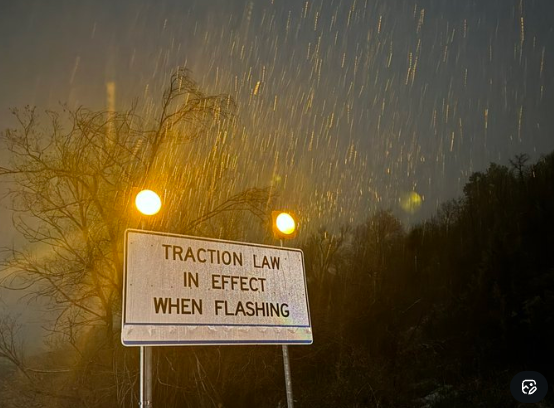
Traction laws help improve road safety, but what are they, and how are they useful during winter storms?
A few states have them, and there can be different requirements for vehicles, including carrying chains, using snow tires or other traction devices.
Driving in severe weather can be extremely dangerous, putting not only drivers and passengers at risk, but pedestrians, too.
Conditions like heavy snow, torrential rain, ice and strong winds can reduce visibility and control, sometimes leading to serious or even fatal accidents.
Colorado, Utah and parts of California have traction laws, and they're usually in effect during winter or in severe snow and ice conditions.
The requirements vary by state and location, and may include carrying chains, using snow tires or other traction devices on certain roads to maintain vehicle stability and improve safety.
DASHCAM: FIRST RESPONDERS LEAP OUT OF RECKLESS DRIVER'S WAY DURING NORTH DAKOTA BLIZZARD
These requirements aid in everything from improved braking, reduced skidding, preventing crashes and overall safety on the road.
The Colorado General Assembly passed a bill called the "Tire Chain Traction Control Device Permit" in 2025 that requires a permit program for installing and removing tire chains or alternate traction devices.
Colorado’s Traction Law is in effect from Sept. 1 through May 31 on the I-70 Mountain Corridor between Dotsero and Morrison, but can be activated on other state highways when dangerous conditions require it.
The law helps keep drivers safe on the road without having to fully shut down a highway. A one-hour highway closure can cost hundreds of thousands of dollars, according to the Colorado Department of Transportation.
DRIVING ON THE ICE AND DRIVING IN THE SNOW: WEATHER DRIVING TIPS FOR DRIVING IN INCLEMENT WEATHER
Not abiding by these requirements will result in a $50 fine, along with a $17 surcharge. But fines could be higher depending on the circumstances, according to Bowman Law Injury Attorneys.
An example of a higher fine could be if a vehicle blocks the road due to improper equipment, the attorney's office said.
Utah is another state that enforces traction laws. Under Administration Rule R920-6, the law goes into effect whenever road conditions warrant, as determined by the Utah Department of Transportation (UDOT) and law enforcement.
The transportation department said traction devices must be used during severe weather conditions on roads throughout Utah, including Big and Little Cottonwood Canyons.
WINTER TRAVEL CAR KIT: CHECKLIST OF EMERGENCY ESSENTIALS TO KEEP IN YOUR CAR IN CASE YOU GET STUCK
Updated legislation, House Bill 196, allows UDOT to enforce traction requirements up to 24 hours before a big storm begins. The legislation also adds a new Class Three designation which allows for stricter enforcement during major storms, and requires vehicles in the Cottonwood Canyons to have at least 5/32-inch tire tread.
Anyone who fails to comply can be cited by law enforcement.
When weather conditions warrant it, California also enforces traction laws, primarily in the mountainous and higher elevation regions.
According to Caltrans, the California Department of Transportation, "You must stop and put on chains when highway signs indicate chains are required. You will usually have about a mile between 'Chains Required' signs and the checkpoint to install your chains."
The rules vary by road signs for chain requirement levels. You can also be cited and fined by California highway patrol if you don't abide by the law.
Fines start at $25, but after mandatory court fees and assessments, the total can be significantly higher depending on the violation and local enforcement.
So how do these states enforce the law? Roadside checks and inspections are carried out throughout these states when the traction law is enforced.
Be sure to check your state's transportation site for all requirements before driving in severe winter conditions.
What's Your Reaction?
 Like
0
Like
0
 Dislike
0
Dislike
0
 Love
0
Love
0
 Funny
0
Funny
0
 Angry
0
Angry
0
 Sad
0
Sad
0
 Wow
0
Wow
0