

















The best celestial events in 2026 you won't want to miss

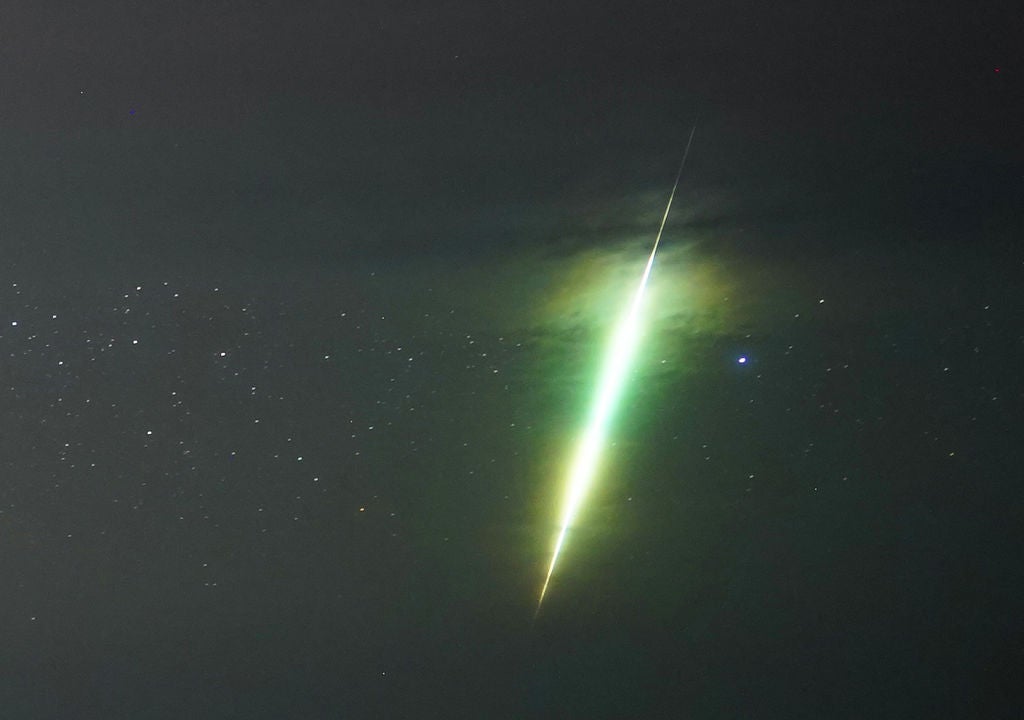
With the new year just around the corner, 2026 is filled with a vibrant lineup of astronomical events that will offer unforgettable viewing for skywatchers throughout the year.
From dazzling meteor showers to dramatic eclipses visible across parts of the world, the year ahead offers countless opportunities to witness life-changing celestial events.
Here are the astronomical events you won’t want to miss in 2026.
Quadrantids meteor shower
The new year is kicking off with the Quadrantids meteor shower, which peaks on the night of Jan. 3.
This meteor shower is considered among the top annual celestial events, offering skygazers a chance to see about 120 shooting stars per hour.
QUADRANTID METEOR SHOWER PEAK TO BRING CHANCES OF FIREBALLS
Unlike other meteor showers that peak for two days, the Quadrantids only last for a few hours, making timing crucial for those hoping to catch the display.
They are best seen from the Northern Hemisphere.
The Wolf Supermoon
On top of the Quadrantids meteor shower, skygazers will also be able to see the first full moon of 2026 at the same time.
The Wolf Supermoon is named for mid-winter and its association with howling wolves in North America.
It will reach its full phase early on Jan. 3 and will appear slightly brighter and larger than average.
A supermoon occurs when the full moon coincides closely with perigee, the nearest point in the moon’s elliptical orbit around Earth.
Jupiter at opposition
January is looking like a very active month for skywatchers. A week after the full wolf moon, Jupiter reaches opposition.
On Jan. 9 and Jan. 10, the planet will appear to be the brightest and largest. This will be the most optimal time to observe the planet.
Annular solar eclipse
2026 will be a prime time for solar eclipses.
The first eclipse will be an annular "ring of fire." This solar eclipse will take place on Feb. 17 and will last two minutes and 20 seconds.
During this time, 96% of the sun will be covered by the moon. Unfortunately, only remote regions of Antarctica will see this celestial wonder.
Total lunar eclipse
People that live in North America, Australia, New Zealand, East Asia and the Pacific will be able to see a "blood moon" total lunar eclipse on March 3.
During this eclipse, the moon turns deep red for 58 minutes. This will be the last total lunar eclipse until 2029.
Spring equinox auroras
Exciting news for astronomy fans, aurora activity is set to be extremely active on March 20.
Around the spring equinox, geomagnetic conditions are likely to spike aurora activity, making it the perfect time to view the northern lights.
The best place to see them would be in Iceland, northern Norway, Sweden, Finland, Alaska or northern Canada.
The Lyrid meteor shower
The annual Lyrid meteor shower will peak the night of April 21 with at least 18 meteors per hour shooting across the dark skies.
The Lyrid meteor shower is produced when the Earth moves through the debris trail from the Thatcher comet, which has been orbiting around the sun for roughly 415 years.
SEE IT: LYRID METEOR SHOWER PEAKS IN DAZZLING WORLDWIDE DISPLAY
The best time to watch this meteor shower will be after midnight and before dawn on April 22.
Full Blue Micromoon
This is a very special moon that will shine bright in the skies on May 3.
The Full Blue Micromoon will be the second full moon in May. This phenomenon is known as the "monthly blue moon" because the lunar cycles don’t line up with the length of the calendar months.
This happens at least seven times every 19 years. The next one will be on Dec. 31, 2028.
This moon is called a micromoon because its size is a bit smaller than the usual full moon. In 2026, there will be three micromoons.
Venus and Jupiter conjunction
Get ready skygazers, this is an exciting one.
On June 9, both Venus and Jupiter will be close together and visible from the southwest from sunset until around 11 p.m.
If you have a clear view, they won’t be hard to spot since both planets will be very bright. They will be about one finger width apart and just below the Castor and Pollux stars.
It’s a quiet month for celestial events. Time to relax and gear up for the second half of the year.
Total solar eclipse
The third eclipse of the year will occur on Aug. 12. During this eclipse, the moon will pass between the Earth and the sun, completely obscuring the sun.
A total solar eclipse occurs when the moon's apparent diameter is larger than the sun's, blocking all direct sunlight, turning day into darkness.
The total eclipse will be seen over the Arctic, Greenland, Iceland, Atlantic Ocean, northern Spain and northeastern Portugal.
Perseid meteor shower
On the same night of the total solar eclipse, the peak of the Perseid meteor shower will happen.
This is known as the most popular meteor shower of the year, with viewers seeing about 50 to 100 meteors per hour.
PERSEID METEOR SHOWER: BEST PLACES AND TIMES TO WATCH FOR THIS WEEKEND'S SHOW
Perseids are known for their fireballs, which are large explosions of light and color. They can persist longer than the average meteor streak, making it a spectacular sight for skywatchers.
Deep partial lunar eclipse
The final eclipse of 2026 will take place on Aug. 28. The deep partial lunar eclipse will cover 96% of the moon’s diameter and will be inside the Earth’s umbra.
It will look very similar to a total lunar eclipse with the moon appearing dark red.
The best place to watch this eclipse will be across Europe, Africa, Asia and Australia.
Venus at peak brightness
In September, Venus will be the highest and brightest of the year.
Just like the moon, Venus goes through phases causing it to look brighter or dimmer. On Sept. 18, Venus will be at its brightest when it’s lit up as a crescent, since the planet will be closer to earth.
The next time Venus will be almost as bright will be on Nov. 27.
Lunar occultation of Jupiter
The moon will pass in front of Jupiter on Oct. 6, causing the planet to temporarily hide behind the moon.
This usually lasts about 30 minutes to an hour, after which Jupiter reappears on the opposite side of the moon.
Skywatchers will be able to view this celestial event from parts of Africa and North America.
The Orionid meteor shower
Every October, the Orionid meteor shower puts on a show for skygazers around the world. In 2026, the Orionid meteor shower will peak from Oct. 21 to Oct. 22.
Viewers will be able to see at least 20 meteors per hour.
The meteors are tiny crumbs left behind by Halley’s Comet, burning through the Earth’s atmosphere at a speed of 41 miles per second.
Leonid meteor shower
The annual Leonid meteor shower will peak from Nov. 17 to Nov. 18. Viewers may be able to see 10 to 20 meteors per hour during this event.
According to NASA, about every 33 years, the Leonids produce a meteor storm with at least 1,000 meteors per hour. The last major event occurred in 2002, so with each preceding meteor shower, the event should get more vivid until the peak.
Uranus at opposition
Uranus at opposition is an astronomical event that occurs when Uranus is positioned directly opposite to the sun.
This will happen on Nov. 25, when the planet appears brighter than usual. Uranus will rise at sunset, reach its highest point around midnight, and set at sunrise.
This is also the time when Uranus is closest to Earth, making it the best opportunity of the year to observe the planet.
Geminid meteor shower
This is known as the best meteor shower of the year, producing some of the most colorful meteors every hour. During its peak from Dec. 13 to Dec. 14, the moon will be a partially illuminated crescent, making it the perfect viewing conditions for skywatchers.
Viewers will be able to see at least 120 meteors per hour. The best place to watch the Geminids is in the Northern Hemisphere.
THE GEMINID METEOR SHOWER PEAK: WHEN TO WATCH THE HIGHLY ANTICIPATED CELESTIAL EVENT
Ursid meteor shower
Right after the Geminids meteor shower, astrological fans will be able to see the Ursids.
The Ursid meteor shower will peak between Dec. 21 and Dec. 22, providing a perfect ending to the meteor calendar.
The best time to view them is late at night, under clear skies.
Christmas Eve supermoon
2026 is ending with a bang, with a supermoon appearing in the sky on Dec. 24. This will be one of the most spectacular full moons of the year, adding to the holiday spirit.
The moon will appear larger and brighter than usual. A supermoon is typically 7 to 14% bigger and 30% brighter than a typical full moon.
The supermoon will rise and set near the horizon, which will create a stunning view.
What's Your Reaction?
 Like
0
Like
0
 Dislike
0
Dislike
0
 Love
0
Love
0
 Funny
0
Funny
0
 Angry
0
Angry
0
 Sad
0
Sad
0
 Wow
0
Wow
0