
















Scientists can no longer predict when Kilauea will erupt due to recent volcanic activity

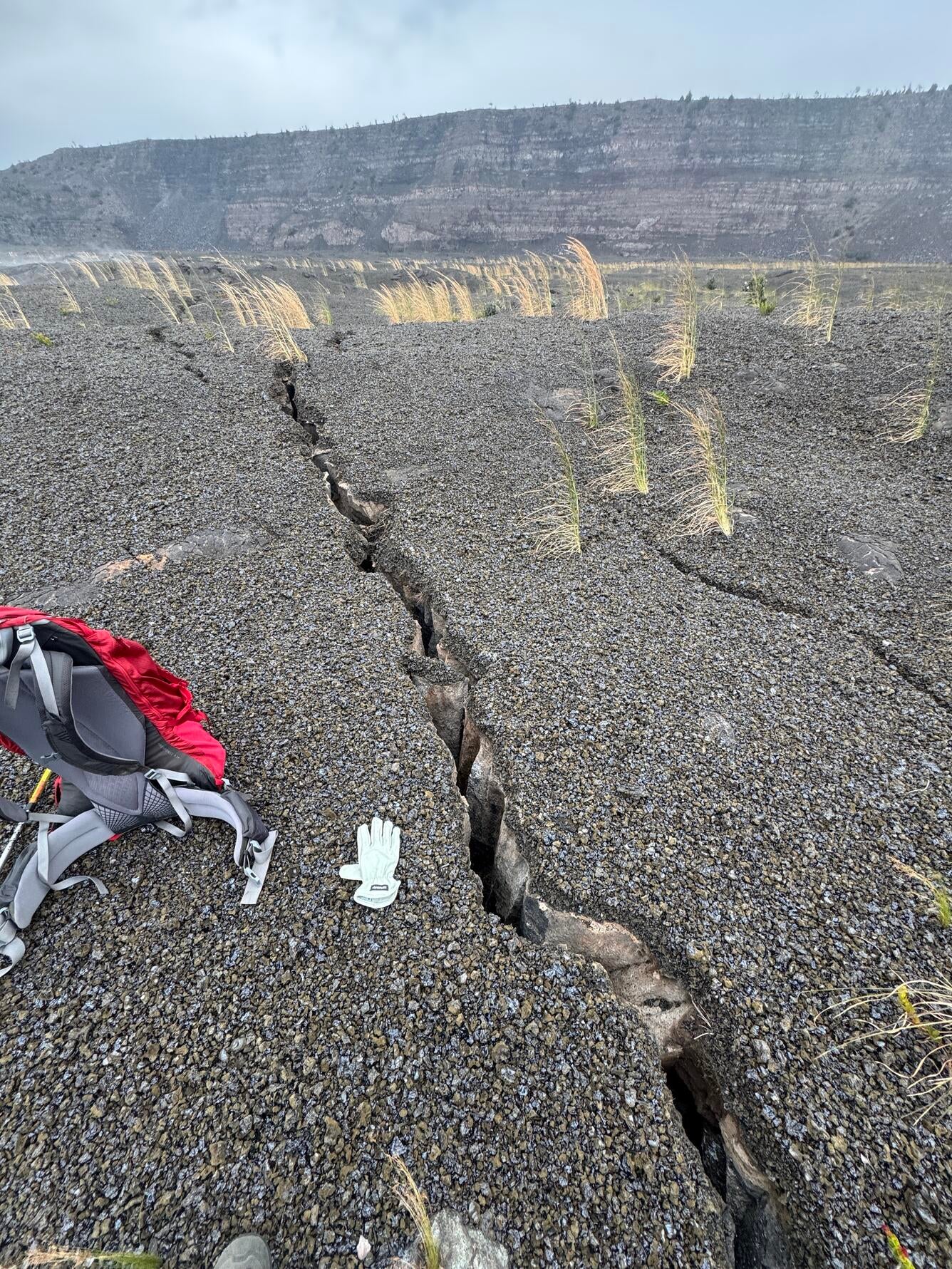
HAWAI'I VOLCANOES NATIONAL PARK, Hawaii – Recent activity beneath Kilauea's surface has made eruption prediction forecasting no longer possible.
Scientists with the U.S. Geological Survey (USGS) said while lava flows that erupted from the north and south vents in Halemaʻumaʻu at the summit of Kīlauea on the night of Sept. 30, magma was also making a new path below the surface of the caldera.
NEARLY 100 EARTHQUAKES SHAKE KĪLAUEA AS VOLCANIC UNREST PROMPTS PARK CLOSURE
This caused the recent swarm of more than 100 earthquakes that rocked Kilauea from Sept. 30 to Oct. 2, which then caused a sheet-like vertical body of magma, called a dike, to open up in the northwestern part of Kaluapele, Kilauea's summit caldera.
A dike forms when magma intrudes into sub-vertical cracks as it moves beneath the surface.
In this case, the earthquakes were accompanied by the ground near the crater tilting upward very quickly.
"The localized nature of the tilt changes indicated they were caused by the intrusion of magma near the western rim of Kaluapele and much closer to the surface than the Halemaʻumaʻu magma chamber," the USGS said.
The combination of seismicity and tiltmeter data was able to provide scientists with the timing of events and the general location, but not the shape and size of the dike.
To find out how big it was, USGS scientists used InSAR satellite images, which showed them that the dike extends from the established vent area in Halemaʻumaʻu crater and cuts across the northwestern part of Kaluapele.
WHAT IF YELLOWSTONE ‘BLOWS’? A LOOK AT THE WORST-CASE SCENARIO
The dike is narrow and elaborate and follows the cracks that formed in the caldera during the 2018 summit collapse and created new, tiny cracks that scientists identified on satellite imagery.
Basically, the vents that have been lava fountaining since 2024 have slowly been rising. Because of this, the pressure needed to push magma out of the vents and trigger a major fountain episode has increased significantly, making it harder for lava to come out.
The USGS said they've noted this with recent activity since episode 54 on Aug. 25 when these inconsistent patterns of inflation continued.
PAIR OF MAGNITUDE 4.0+ EARTHQUAKES STRIKE NEAR ICELAND GLACIER AND VOLCANO
"The opening of six vents on and below the northwest wall of Halemaʻumaʻu on September 14 to 16 suggests that magma is able to intrude into pre-existing weak, fractured areas along the northern and western boundaries of Halemaʻumaʻu without having to create new space," the USGS said.
Therefore, because the lava has to work harder to fountain up and out, it's finding a new way to go that exploits weaknesses beneath the surface from that 2018 summit collapse.
The impact of the Kilauea summit's increased pressurization and earthquakes on the next episode of lava fountaining, if any, isn't known right now, scientists said.
This means that scientists can no longer forecast when Kilauea will erupt next based on patterns.
AMERICAN TOURIST KILLED BY LIGHTNING WHILE CLIMBING MOUNT ETNA AMID ACTIVE VOLCANIC PHASE
It doesn't mean any eruptions that occur in the future will be a surprise. Data from tiltmeters and earthquakes, among other things, will help them figure out when an eruption may occur, often giving days or at least hours' notice prior to the event.
A few scenarios could happen next:
FOX Weather will continue to bring you the latest updates from Kilauea as USGS scientists monitor the situation.
What's Your Reaction?
 Like
0
Like
0
 Dislike
0
Dislike
0
 Love
0
Love
0
 Funny
0
Funny
0
 Angry
0
Angry
0
 Sad
0
Sad
0
 Wow
0
Wow
0