


















US Forest Service agency headquarters moved to Utah as 'sweeping restructure' begins

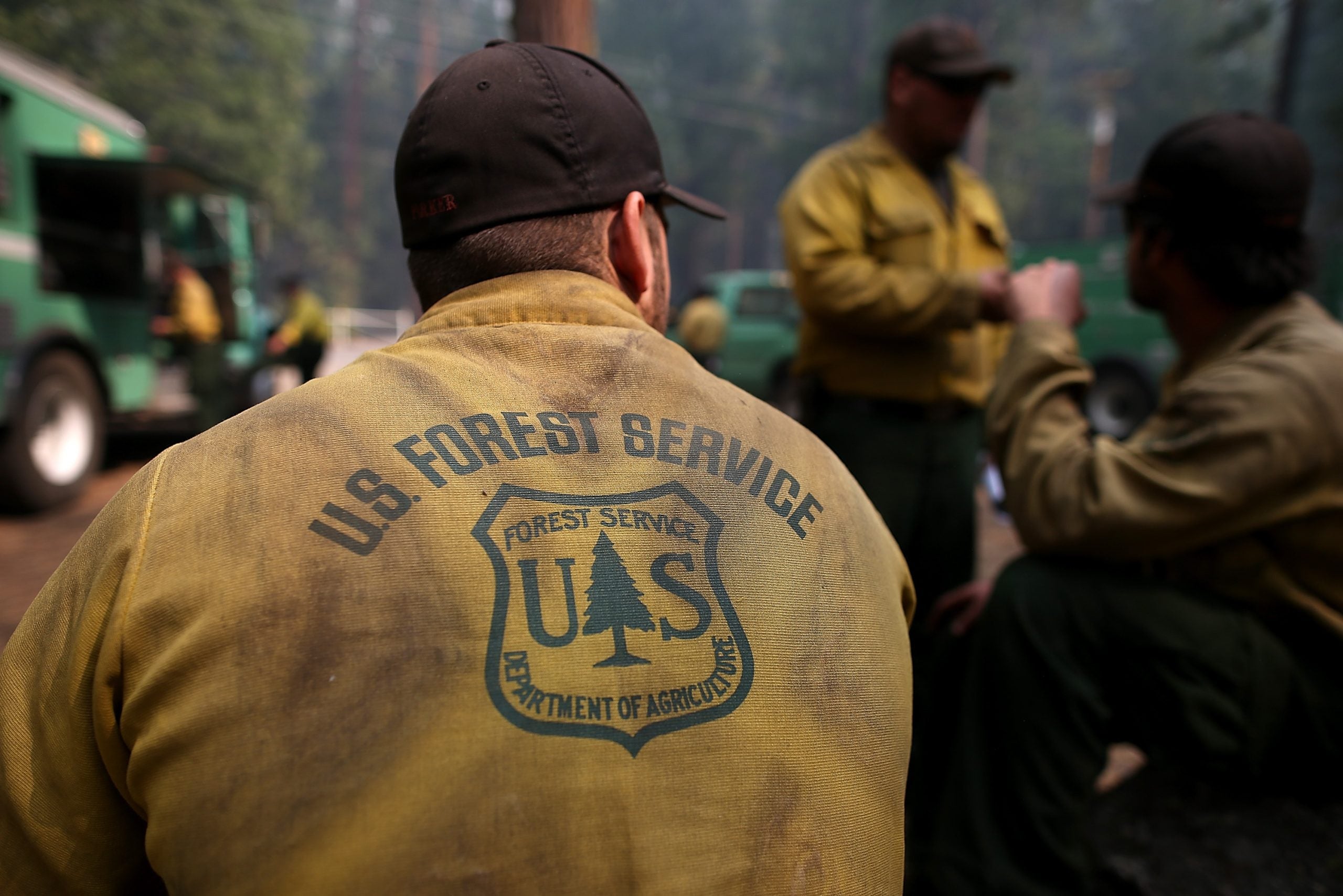
WASHINGTON D.C. – The U.S. Department of Agriculture (USDA) recently announced the beginning of a "sweeping restructure" of the U.S. Forest Service, beginning with the relocation of the agency's headquarters from the U.S. capitol to Salt Lake City, Utah.
Moving the headquarters from Washington D.C. to the West aims to improve the agency's core mission of managing U.S. national forests and grasslands, a USDA press release said.
"For an agency whose lands, partners, and operational challenges are overwhelmingly concentrated in the West, the shift represents a structural reset and a common-sense approach to improve mission delivery," the press release announcing the agency restructuring said.
WATCH AS A FIREMAN SAVES GOLDEN RETRIEVER FROM FROZEN POND SOUTH OF DENVER
Founded in 1905, the Forest Service manages 193 million acres of national forests and grasslands to sustain their health, diversity and productivity.
"This is a big win for Utah and the West. Nearly 90% of Forest Service lands are west of the Mississippi, so putting leadership closer to the lands they manage just makes sense," Utah Gov. Spencer Cox said. "This isn’t symbolic. It means better, faster decisions on the ground. Everyone who depends on our public lands, from hikers and campers to ranchers and timber producers, will benefit from this change."
In the restructure, the Forest Service will transition to a more state-based organizational model, moving away from the regional model the agency has operated under since its formation.
All the agency's nine regional offices will be closed, and under the new model, 15 state directors will be distributed throughout the country to oversee operations in one or more states.
According to the press release, the state-based approach aims to simplify the chain of command, strengthen local partnerships and give field leaders greater ability to respond to conditions on the ground. That being said, federal authorities will remain fully intact, and no authorities are being shifted, reduced or transferred, according to the USDA.
Many functions currently housed in the regional offices will be transferred to six operational hubs that will be established in Albuquerque, New Mexico; Athens, Georgia; Fort Collins, Colorado; Madison, Wisconsin; Missoula, Montana; and Placerville, California.
According to the press release, these centers will provide shared administrative, technical and enabling support to forests and state offices nationwide, allowing field leadership to focus more directly on actions that improve the health, productivity and resilience of our nation’s forests.
"Proper forest management means a healthy and productive forest system that provides affordable, quality lumber to build homes right here in America, and it means preserving and protecting the beautiful landscapes we are blessed with across this great country," U.S. Secretary of Agriculture Brooke L. Rollins said.
TO STUDY CALIFORNIA’S LARGEST ACTIVE VOLCANO, SCIENTISTS FIRST HAVE TO CLIMB
Under the restructure, 57 of the U.S. Forestry Services 77 research stations will be consolidated under a national Forest Service Research and Development organization in Fort Collins. The remaining 20 facilities will continue to serve the agency by supporting essential functions during and after the transition.
According to the USDA, the reorganization does not eliminate scientific positions, cancel research programs or reduce the national research footprint.
"Colorado is known for our outdoor spaces and nation-leading research institutions that are strengthening our forests and public lands, so it only makes sense that the U.S. Forest Service would include a location in our great state," Colorado Gov. Jared Polis said.
The Forest Service's Fire and Aviation Management program will continue to operate under regional hubs that coordinate wildfire response across the U.S., and the program will continue reporting to the deputy chief for fire and aviation management at the National Interagency Fire Center in Boise, Idaho.
While the inter-agency wildland firefighting collaboration will remain as it is, the restructure is a transitional shift that will eventually merge all wildland fire operations into the unified U.S. Wildland Fire Service within the Department of the Interior.
WATCH: WILDLAND FIREFIGHTERS LEAP FROM 3,000 FEET IN THE AIR TO COMBAT THE SPREAD OF WILDFIRES
According to the USDA, throughout the transition, frontline mission work will continue uninterrupted. This includes active forest management, wildfire response, forest and watershed restoration, recreation services and sustained collaboration with states, tribes and communities.
The U.S. Forest Service was founded over 120 years ago to provide quality water and timber for the nation’s benefit, and has since evolved into a vital agency dedicated to protecting U.S. wildlands.
According to the U.S. Forest Service, Congress later directed the agency to broaden its management scope for multiple additional uses and benefits and for the sustained yield of renewable resources such as water, forage, wildlife, wood and recreation.
IS NASA CONSIDERING RECLASSIFYING PLUTO AS A PLANET IN OUR SOLAR SYSTEM?
"This is about building a Forest Service that is nimble, efficient, effective and closer to the forests and communities it serves," Forest Service Chief Tom Schultz said. "Effective stewardship and active management are achieved on the ground, where forests and communities are found—not just behind a desk in the capitol."
The National Federation of Federal Employees condemned the decision to relocate the U.S. Forest Service headquarters, calling the move a "reckless disruption to the dedicated workforce that manages the nation's forests, fights wildfires and services the public."
The agency now manages 193 million acres of public lands in the form of national forests and grasslands, while providing technical and financial assistance to state, private and tribal forestry.
What's Your Reaction?
 Like
0
Like
0
 Dislike
0
Dislike
0
 Love
0
Love
0
 Funny
0
Funny
0
 Angry
0
Angry
0
 Sad
0
Sad
0
 Wow
0
Wow
0