
















Scientists use new methods to map Yellowstone's hidden underground plumbing system

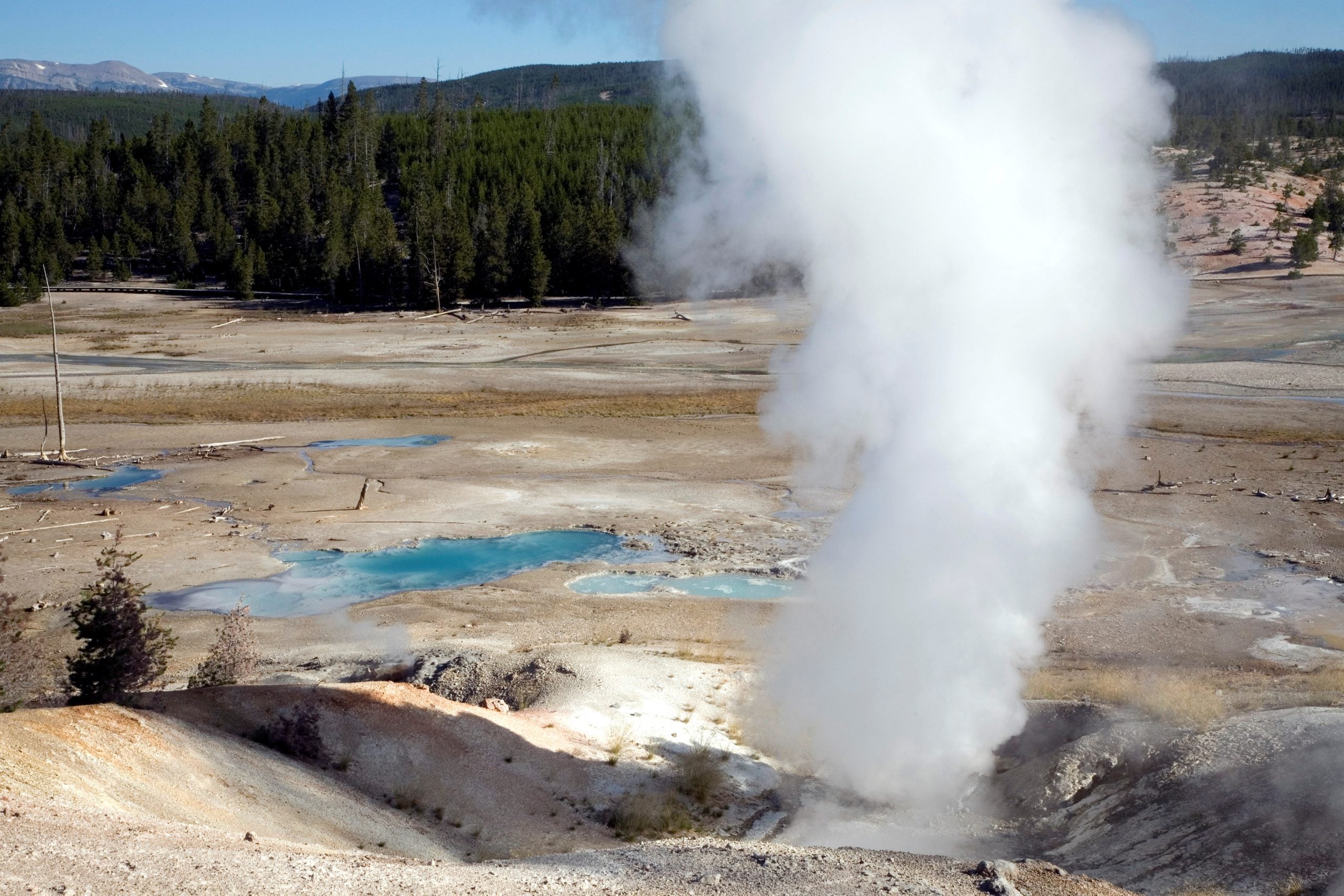
Underneath Yellowstone National Park in Wyoming lies a complex plumbing system of hot water, steam and rock that fuels the park’s magnificent geysers and hot springs.
HERE'S HOW AI HELPED RESEARCHERS DISCOVER THOUSANDS OF MINI EARTHQUAKES BENEATH YELLOWSTONE
For decades, scientists have tried to better understand this underground system. Until recently, they were unaware what the subsurface actually looked like.
In the past, geoscientists relied on drilling boreholes to study Yellowstone’s underground environment. But, this method triggered eruptions of steam and boiling water, making the work both dangerous and difficult.
Many of these boreholes have since been sealed, leaving scientists to depend on archival drilling logs and rock core that were extracted.
According to the Yellowstone Volcano Observatory, researchers are now using a new technique to map Yellowstone’s subsurface. The method is geophysics, a subfield of geology that studies the physical properties of rock and fluids in the subsurface to map out the system beneath the national park.
GRAND CANYON NATIONAL PARK ANNOUNCES NORTH RIM REOPENING AS DRAGON BRAVO FIRE RECOVERY CONTINUES
This approach is noninvasive, meaning the techniques do not significantly disturb the ground in order to learn about the hydrothermal system.
In 2018, a team from the University of Wyoming used these techniques to create images of Yellowstone’s underground plumbing system.
The researchers collected multiple datasets beneath Sentinel Meadows, a hydrothermally active drainage area in the Lower Geyser Basin. As well as focusing on the plumbing system beneath Rosette Spring.
WHAT CAUSED THE EXPLOSION AT YELLOWSTONE NATIONAL PARK? GEOLOGIST WEIGHS IN
The team utilized a technique called Electrical Resistivity Tomography to identify areas that contain less hydrothermal water, since the water is electrically conductive.
By using this approach, the researchers were able to measure the underground hydrothermal waters without drilling or causing damage to the environment.
They discovered that hydrothermal water lies about 16 to 33 feet below the surface, but there is no clear pipe or conduit leading directly to the spring.
COOLING WATERS LIFTS FISHING RESTRICTIONS FOR SELECT RIVERS AND STREAMS AT YELLOWSTONE NATIONAL PARK
Scientists assume the water travels through a dense network of tiny pathways within glacial deposits to reach the surface. These pathways are so small that they are difficult to detect with the current field equipment.
Despite these findings, researchers still do not fully understand how water travels from deep underground to the surface.
As technology improves, new geophysical data will continue to provide insights into how Yellowstone’s underground hot water plumbing system works.
What's Your Reaction?
 Like
0
Like
0
 Dislike
0
Dislike
0
 Love
0
Love
0
 Funny
0
Funny
0
 Angry
0
Angry
0
 Sad
0
Sad
0
 Wow
0
Wow
0