












NOAA uses AI and satellites to map out global algae bloom over millions of miles

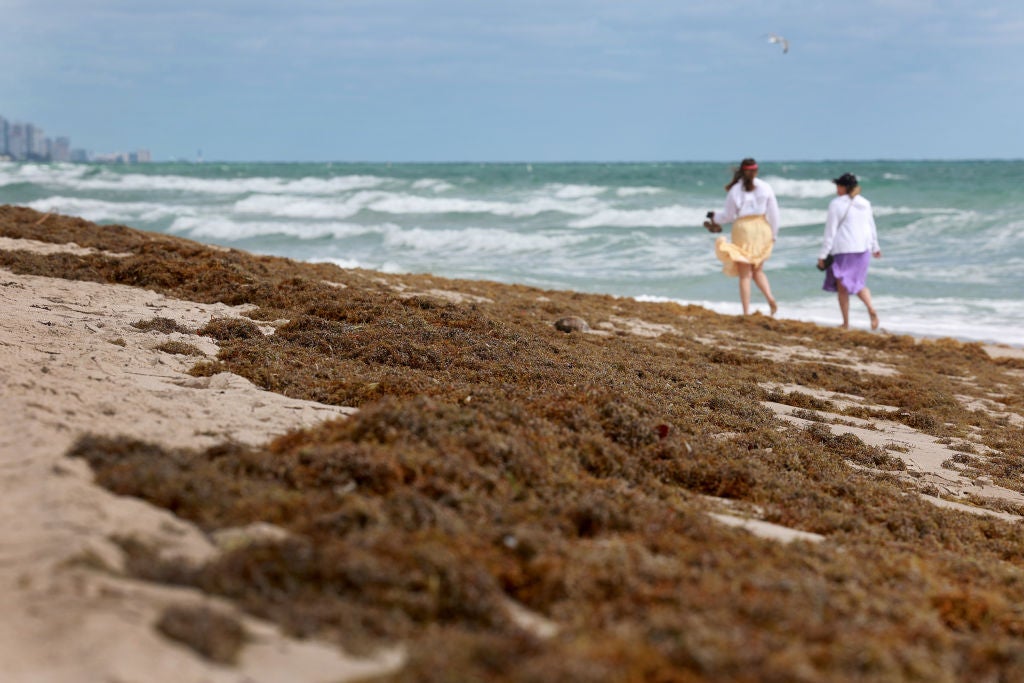
Scientists from the National Oceanic and Atmospheric Administration are using artificial intelligence and satellite imagery to map global algae blooms just as sargassum reaches peak bloom season in Florida and the U.S. Caribbean.
SMELLY SARGASSUM SEAWEED BLOB INVADES FLORIDA BEACHES DURING BUSY SPRING BREAK TRAVEL SEASON
NOAA’s Center for Satellite Applications and Research (STAR), in collaboration with the University of South Florida (USF), paired AI with more than one million satellite images to detect and quantify floating seaweed and phytoplankton in the world’s oceans.
The research builds on a 2019 study by NOAA and USF, when researchers added new ocean color data to STARS’ Ocean Color Viewer tool.
Scientists realized the update provided a global view of floating algae for the first time, but it was difficult to determine the total surface area covered.
HERE'S WHAT HAPPENS IN THE MOMENTS FOLLOWING THE ARTEMIS II SPLASHDOWN
To address that challenge, researchers combined AI with satellite data from 2003 to 2023. This allowed them to observe floating seaweed and phytoplankton in the Atlantic, Pacific and Indian oceans, as well as in several marginal seas.
The study marked the first time scientists have produced a complete picture of floating algae around the world.
Researchers found that blooms were located in both coastal and deep open waters and cover almost 17 million miles. That is four times the size of the U.S.
These findings helped scientists better understand the spatial extent and long-term changes in marine plant growth, which can negatively affect economies.
According to NOAA, most algae species reach peak growth during the spring and summer months. Their optimal growth is determined by temperature and nutrients in the water.
While moderate blooms can benefit marine ecosystems and fisheries, large algal blooms are often harmful to the environment and marine life.
By mapping these blooms, scientists can identify areas where tourism, commercial and fishing will be negatively impacted.
What's Your Reaction?
 Like
0
Like
0
 Dislike
0
Dislike
0
 Love
0
Love
0
 Funny
0
Funny
0
 Angry
0
Angry
0
 Sad
0
Sad
0
 Wow
0
Wow
0