

















From liftoff to splashdown: See the most pivotal moments of the historic Artemis II mission

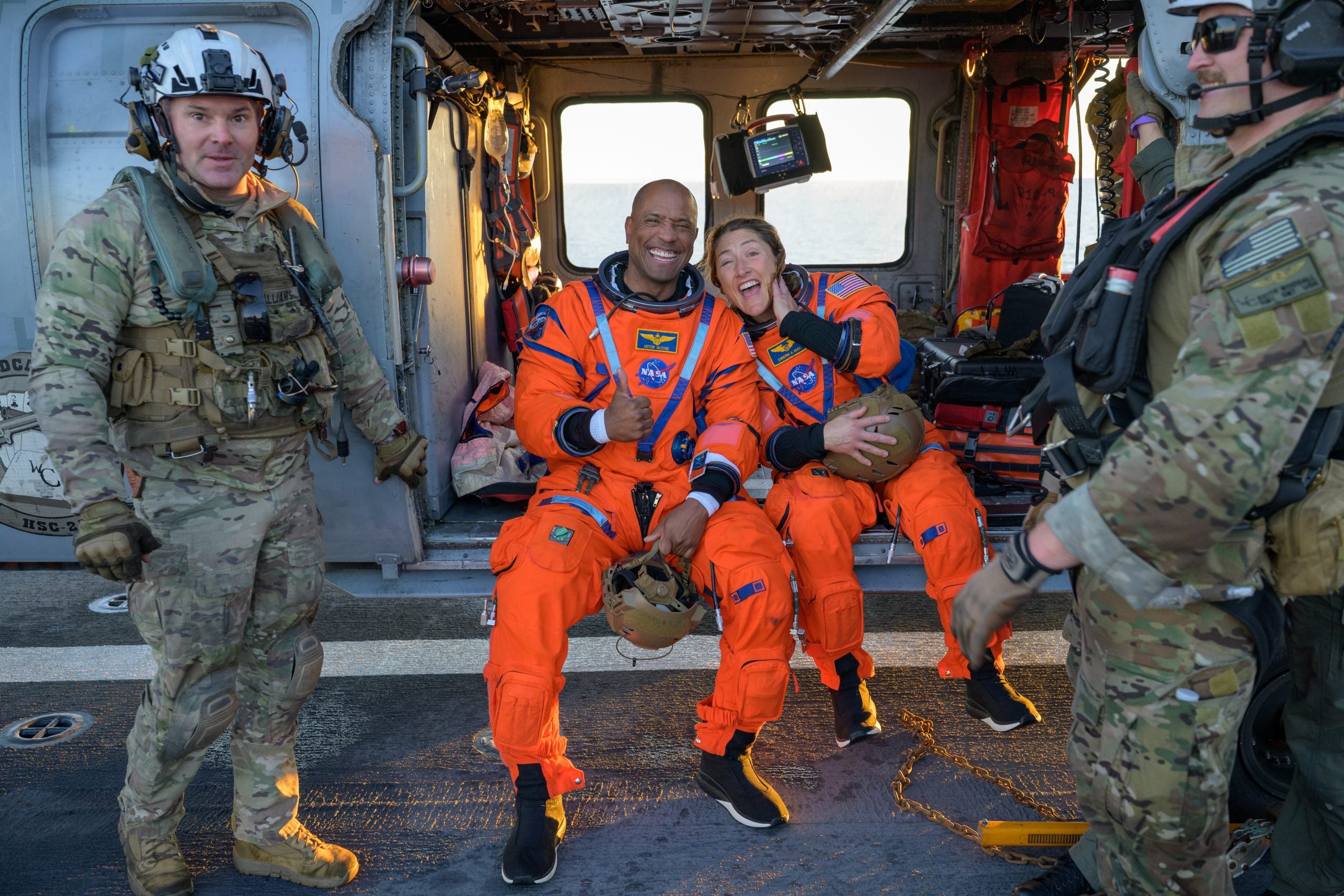
The record-setting Artemis II mission came to an end on Friday evening after a textbook splashdown and a successful journey to the moon and back.
The crew journeyed 694,481 miles total on the mission, becoming the first humans to ever go that far into deep space, and the first astronauts to make it to the moon in more than 50 years.
During the 10-day mission, the crew and NASA provided some incredible photos, showing the world the moon and Earth in a way no one has ever seen.
It all started on April 1, when NASA Astronauts Reid Wiseman, Victor Glover, Christina Koch and Canadian Space Agency Astronaut Jeremy Hansen, lifted off from Kennedy Space Center aboard the Orion spacecraft they named "Integrity" and the SLS rocket, which carried them into space.
ARTEMIS II BRINGS PIECES OF THE PAST ON ITS HISTORIC DEEP SPACE VOYAGE
The next hours were spent completing necessary engine burns to get the crew onto the correct path to complete a day of high-earth orbit prior to a translunar injection burn, putting them on course for the moon.
The crew and Mission Control at Johnson Space Center in Houston conducted tests on Orion to ensure its life systems capability, and troubleshooted a toilet issue with the crew.
On April 2, Orion completed its translunar injection burn.
The astronauts also utilized their flywheel exercise device for the first time. Astronauts in space are required to do daily exercise, as the zero-gravity environment can cause muscle and bone loss.
NASA'S ARTEMIS PROGRAM: PAVING THE WAY FOR HUMANKIND'S RETURN TO THE MOON AND BEYOND
The next few days were action-packed for the crew. They spent time preparing their cabin for the lunar flyby that took place on flight day 6, as well as doing other things necessary for the science of the mission.
Mission specialists Christina Koch and Jeremy Hansen did a manual piloting demonstration of Orion to provide engineers with more data about the spacecraft’s piloting capabilities.
Additionally, the crew tested the Orion Crew Survival System Suits. They conducted a full sequence of suit operations, including putting on and pressurizing their suits, performing leak checks, simulating seat entry and assessing mobility and their ability to eat and drink, according to NASA.
HOW LIGHTNING STRIKING APOLLO 12 FOREVER CHANGED NASA'S LAUNCH WEATHER POLICIES
On Monday, April 6, the Artemis II crew made history, going deeper into space than any ever had as they completed the lunar flyby.
Stunning visuals came out of their time flying around the moon on flight day 6.
The crew entered a 40-minute communications blackout with Mission Control in Houston when they reached the far side of the moon, using that time to make detailed observations of geologic features on the lunar surface.
During their lunar flyby, they also witnessed a solar eclipse, and became the first people to wear solar eclipse glasses at the moon.
Following the lunar flyby, the crew began their journey home.
On Day 7, the Artemis II team had a call with NASA's Expedition 74 on the International Space Station. The call lasted 15 minutes, and the two teams spoke together about their meals and activities on the mission.
10 IMPORTANT ROCKET LAUNCHES IN THE HISTORY OF THE US SPACEFLIGHT
On Flight Day 8, pilot Victor Glover and Commander Reid Wiseman had the chance to complete more manual piloting demonstrations aboard Orion.
The crew also had media availability, where news outlets were able to speak to the crew directly and ask them questions.
IS NASA CONSIDERING RECLASSIFYING PLUTO AS A PLANET IN OUR SOLAR SYSTEM?
They also tested their orthostatic garments which go under their spacesuits.
On Flight Day 9, the crew began their final preparations for splashdown, including configuring their cabin.
The final day of the Artemis II mission began with the crew waking up at 11:35 a.m. ET. They spent the first few hours of their day readying their cabin for splashdown, completed their final return trajectory correction burn and then got busy as the final few hours of the mission commenced.
The crew module separated from the service module right before entering Earth's atmosphere. The Orion spacecraft did a final raise burn to lock in the final trajectory of splashdown.
NASA PAUSES GATEWAY LUNAR-ORBIT SPACE STATION TO BUILD LUNAR BASE ON THE MOON
At 7:53 p.m., as the spacecraft went through Earth's Atmosphere, the team entered a 6-minute communications blackout.
When they reemerged at about 8 p.m., they had minutes until their parachutes deployed, slowing their descent.
Everything went exactly as planned, with splashdown occurring at 8:07 p.m. ET.
The next few hours were spent powering down Orion, getting the crew off the ship and onto helicopters, where they were taken to the USS John P. Murtha and given a full medical exam.
As of Saturday morning, the crew was doing well.
What's Your Reaction?
 Like
0
Like
0
 Dislike
0
Dislike
0
 Love
0
Love
0
 Funny
0
Funny
0
 Angry
0
Angry
0
 Sad
0
Sad
0
 Wow
0
Wow
0